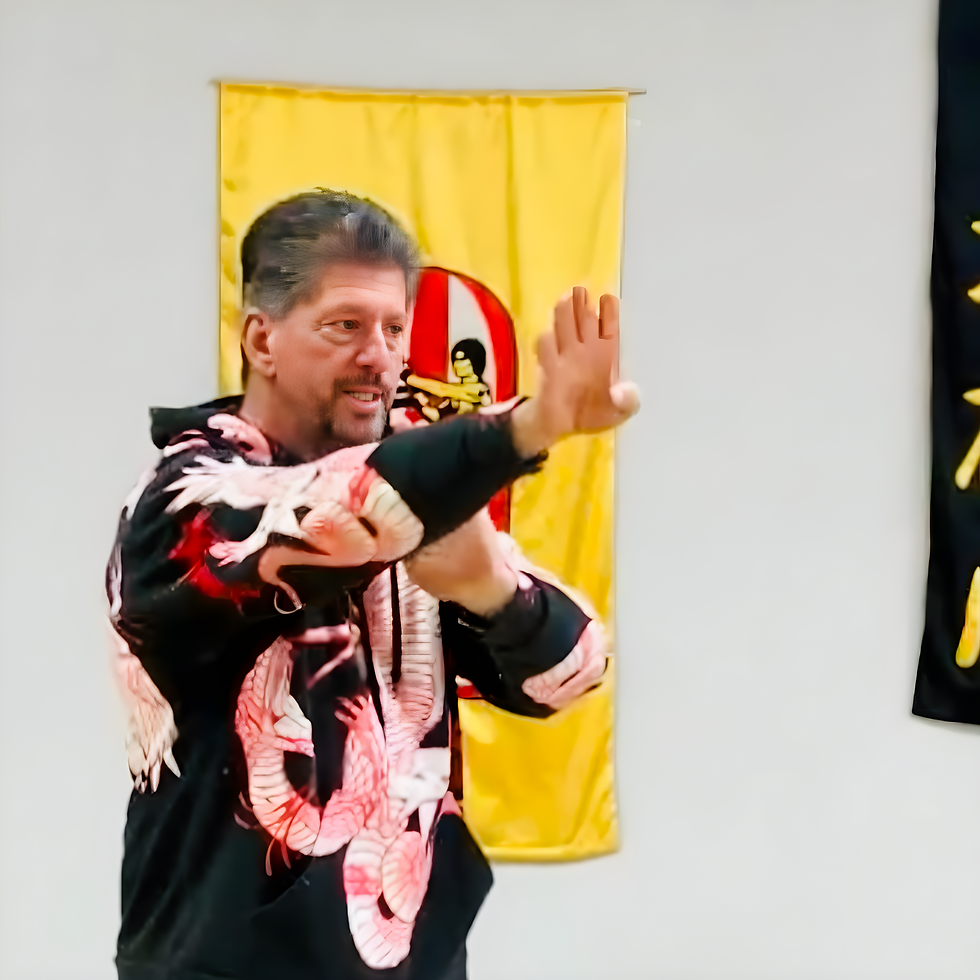
A Wing Chun Kicking Workout

A Wing Chun kicking workout focuses on developing speed, precision, balance, and power in your kicks, emphasizing the art’s principles of efficiency and centerline control. Below is a structured workout tailored to Wing Chun kicking techniques, suitable for solo practice or with a partner. This workout builds on your previous interest in Wing Chun training (like elbow routines and punching workouts) to enhance your lower-body skills. It’s designed to be practical, requiring minimal equipment, and can be done in a small space.
Wing Chun Kicking Workout (30–45 Minutes)
Warm-Up (5–10 Minutes)
• Joint Mobility (2–3 min): Rotate ankles, knees, and hips (10 circles each direction per joint) to loosen up.
• Dynamic Stretching (3–4 min): Perform leg swings (front-to-back and side-to-side, 10 per leg), high knees (30 seconds), and butt kicks (30 seconds).
• Shadow Kicking (2–3 min): Lightly perform front kicks and side kicks in the air, focusing on form and balance (10 per leg, slow and controlled).
Main Workout (20–30 Minutes)
Focus on key Wing Chun kicks: Front Kick (Thrust Kick), Side Kick, and Low Round Kick. These are practical, direct, and align with Wing Chun’s philosophy of economy of motion.
1. Technique Drills (10–12 min)
Practice each kick slowly to perfect form, then increase speed. Perform in a narrow stance to mimic Wing Chun’s compact structure.
• Front Kick (4 min)
• Target: Groin, stomach, or knee (low-line focus).
• Execution: From a Wing Chun stance (Yee Jee Kim Yeung Ma), lift your knee straight up, keeping toes pointed up, then thrust forward with the ball of your foot or heel. Retract immediately to stance.
• Drill: 3 sets of 10 per leg (slow), then 2 sets of 15 per leg (faster). Focus on snapping the kick and maintaining balance.
• Tip: Keep your hands up in guard to protect your centerline.
• Side Kick (4 min)
• Target: Knee, thigh, or ribs.
• Execution: Lift your knee, pivot your base foot outward, and extend the kick sideways with the heel or blade of the foot. Retract quickly.
• Drill: 3 sets of 10 per leg (slow), then 2 sets of 15 per leg (faster). Practice pivoting smoothly to avoid telegraphing.
• Tip: Angle your body slightly to protect your groin during the kick.
• Low Round Kick (3–4 min)
• Target: Calf, knee, or thigh (low-line focus).
• Execution: Lift your knee, pivot slightly, and swing your shin or instep in a tight arc. Return to stance.
• Drill: 2 sets of 10 per leg (slow), then 2 sets of 15 per leg (faster). Keep the motion tight, not a wide Muay Thai-style arc.
• Tip: Use your hips minimally to stay true to Wing Chun’s directness.
2. Power and Speed Drills (8–10 min)
Use a heavy bag, pad, or partner (if available) to develop impact and speed. If no equipment, shadow kick with intent.
• Heavy Bag/Pad Kicks (6 min)
• Drill: Alternate front and side kicks on the bag/pad. 3 rounds of 1 minute each (30 seconds per leg, moderate speed). Focus on driving through the target. Rest 30 seconds between rounds.
• Low Round Kick Power (2 min): 2 sets of 10 per leg, full power, aiming for the lower part of the bag (calf/knee height).
• Tip: If no bag, visualize a target and kick with intent, stopping short of full extension to avoid hyperextension.
• Speed Burst (2–3 min)
• Drill: Perform 3 sets of 20 rapid front kicks (10 per leg) as fast as possible while maintaining form. Rest 20 seconds between sets.
• Tip: Stay light on your base foot to enhance speed.
3. Combination Drills (5–8 min)
Integrate kicks with Wing Chun hand techniques to simulate realistic scenarios, connecting to your prior interest in combining punches with other movements.
• Kick-Punch Combo (3 min): Front kick (right leg) → chain punch (3 punches) → side kick (left leg). 2 sets of 10 combos. Switch lead leg after each set.
• Kick-Trap Combo (2–3 min): Side kick (right leg) → Pak Sao (slapping block with left hand) → front kick (left leg). 2 sets of 10 combos.
• Tip: Practice in a mirror to check your centerline alignment and guard position.
Cool-Down (5–7 Minutes)
• Static Stretching (4 min): Stretch quads (hold each leg for 20 seconds), hamstrings (forward bend, 30 seconds), and hip flexors (lunge stretch, 20 seconds per side).
• Breathing and Relaxation (1–2 min): Stand in Wing Chun stance, breathe deeply (inhale 4 seconds, exhale 4 seconds), and focus on relaxing your legs and core.
Tips for Effective Training
• Stance and Balance: Always return to a stable Wing Chun stance after each kick to maintain readiness.
• Equipment: If you have a partner or pads, use them for feedback on power and accuracy. A mirror or video recording helps refine form.
• Progression: Start with 2–3 sessions per week, increasing intensity as your balance and flexibility improve.
• Safety: Avoid overextending kicks without a target to prevent joint strain. Wear supportive shoes if training on hard surfaces.
This workout builds kicking proficiency while staying true to Wing Chun’s principles of directness and efficiency.