
Bagua, the I Ching, Martial Arts, and Meditation
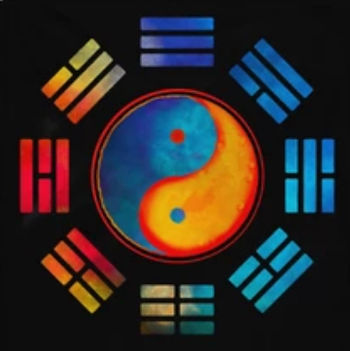
In the vast tapestry of ancient Chinese traditions, few practices weave together philosophy, physical discipline, and spiritual insight as intricately as Bagua Zhang. Often simply called Bagua, this internal martial art—translated as “Eight Trigram Palm”—draws its name and essence from the I Ching, or Book of Changes, an ancient text that has guided thinkers, diviners, and warriors for millennia. Bagua is more than a fighting system; it’s a dynamic form of moving meditation that embodies the Taoist principles of change, balance, and harmony with the universe. This article explores the profound connections between Bagua, the I Ching, martial arts techniques, and meditative practices, revealing how this art form fosters both self-defense prowess and inner peace.
The I Ching: Foundation of Change and Philosophy
The I Ching, known as the Yì Jīng or Classic of Changes, is one of the oldest and most revered texts in Chinese philosophy, dating back to the Western Zhou period around 1000–750 BC. Originally a divination manual, it evolved into a cosmological and philosophical guide during the Warring States period (500–200 BC), with added commentaries called the Ten Wings that infused it with moral and metaphysical depth. By 136 BC, Emperor Wu of Han declared it one of the Five Classics, cementing its influence on Confucianism, Taoism, and even Buddhism.
At its core, the I Ching is structured around 64 hexagrams, each composed of six stacked lines—either solid (yang) or broken (yin)—formed by combining eight fundamental trigrams, or bagua. These trigrams represent natural forces and cosmic principles: Heaven (Qian), Earth (Kun), Thunder (Zhen), Wind (Xun), Water (Kan), Fire (Li), Mountain (Gen), and Lake (Dui). The text teaches that all existence is in constant flux, guided by the interplay of yin and yang, and the five elements (Wuxing).
While the I Ching itself does not directly reference martial arts, its philosophical framework profoundly shapes them, particularly through Taoism. It symbolizes the universe as a microcosm of change, encouraging practitioners to align with natural rhythms rather than resist them—a concept central to internal martial arts like Bagua.
Bagua Zhang: History and Origins
Bagua Zhang emerged in the early 19th century, attributed to the legendary master Dong Haichuan (1797–1882), who is credited with formalizing the art. Born in Hebei Province, Dong traveled extensively, studying various martial traditions and immersing himself in Taoist and possibly Buddhist practices in rural China’s mountains. He synthesized these influences—village fighting arts, Daoist meditation, and even skills from his time as a salt merchant and waiter—into a unique system originally called Zhuan Zhang (“Turning Palms”). Upon arriving in Beijing, Dong impressed the Imperial court with his evasive, fluid movements, earning a role as an instructor and bodyguard to royalty. He taught publicly, amassing disciples who spread and diversified the art into styles like Yin, Cheng, Liang, and others.
The name Bagua Zhang directly honors the I Ching’s eight trigrams, reflecting Dong’s integration of Taoist cosmology. Some accounts suggest Dong learned circle-walking meditation from Daoist hermits, combining it with pre-existing martial forms to create an art that mimics nature’s cycles—ever-changing, spiraling, and adaptive. Unlike external styles focused on brute force, Bagua is an internal art (neijia), one of the “three sisters” alongside Tai Chi Chuan and Xing Yi Quan, emphasizing internal energy (qi) cultivation over mere physicality.
The Interplay Between Bagua and the I Ching
Bagua Zhang’s connection to the I Ching is both symbolic and practical, embodying the text’s core tenet of perpetual change. The eight trigrams inspire the art’s foundational movements, with each “palm change” corresponding to a trigram’s energy: for instance, Heaven’s expansive force or Water’s flowing adaptability. Practitioners “walk the circle” while visualizing these trigrams, aligning body movements with cosmic principles to harmonize yin and yang within themselves.
This link was popularized by later masters like Sun Lutang, who explicitly aligned palm changes with I Ching hexagrams in the early 20th century, though some scholars argue the association was more “window dressing” for legitimacy than inherent to Dong’s original teachings. Regardless, Bagua’s circular, unpredictable footwork mirrors the I Ching’s hexagrams as dynamic processes, not static symbols. As Taoist philosophy teaches, true power lies in yielding and flowing—like water eroding rock—rather than direct confrontation. This makes Bagua a living embodiment of the I Ching, where martial application becomes a philosophical practice, training the mind to anticipate and adapt to chaos.
Martial Arts Techniques in Bagua
As a martial art, Bagua Zhang is renowned for its versatility and efficiency, particularly against multiple opponents. Its hallmark is circle-walking: practitioners traverse a circular path (typically 6–12 feet in diameter) in low stances, facing the center while executing fluid transitions. This builds centripetal force, enhances balance, and trains evasive footwork that allows one to “borrow” an attacker’s momentum, circling behind them for counters.
Techniques encompass a broad arsenal:
• Strikes: Open-palm slaps, fists, elbows, and finger jabs, delivered with coiling body motions for explosive power.
• Grappling: Joint locks, throws, and wrestling, especially in styles like Cheng, which emphasize close-range control.
• Kicks and Footwork: Low sweeps and high kicks integrated into continuous motion, with hooking steps (kou bu) and inward placements (bai bu) for seamless direction changes.
• Weapons: Practitioners adapt principles to everyday objects, but traditional tools include the bagua sword, deer horn knives, staff, spear, and even the judge’s pen for disarming.
Bagua’s “post-birth” method focuses on combat, teaching deception through angles and rapid shifts, never lingering in one spot. This contrasts with linear arts like Xing Yi, yet the two are often paired for complementary training—Xing Yi’s direct power balanced by Bagua’s fluidity. The result is a fighter who moves like the wind, embodying the I Ching’s changes to outmaneuver foes.
Meditation and Health Benefits in Bagua
Beyond combat, Bagua is a profound meditative practice, often called “moving meditation.” The pre-birth method (xian tian) prioritizes health and qi cultivation over fighting, using circle-walking to open energy pathways (meridians) and connect with “universal cosmic forces.” Static postures held while circling build internal power (neigong), fostering relaxation, emotional balance, and mindfulness. This aligns with Taoist goals of emptying the mind, much like the I Ching’s call to observe change without attachment.
Physically, Bagua strengthens the core, improves flexibility, and enhances rooting and awareness—benefits that extend to other sports or arts. Mentally, it clears blockages, reduces stress, and promotes longevity. Practitioners report heightened creativity and flow states (wu wei), transforming daily life into a practice of harmonious adaptation.
Bagua Zhang stands as a bridge between the ancient wisdom of the I Ching and the practical demands of martial arts and meditation. Through its circular dances of change, it invites us to embrace life’s flux, cultivating a warrior’s resilience and a sage’s serenity. Whether for self-defense, health, or spiritual growth, Bagua offers a timeless path to alignment with the cosmos. As Dong Haichuan’s legacy endures, modern practitioners—from Beijing courtyards to global dojos—continue to evolve this art, proving that true mastery lies in the eternal cycle of transformation.


