
Still Training: My Wing Chun Journey After 60
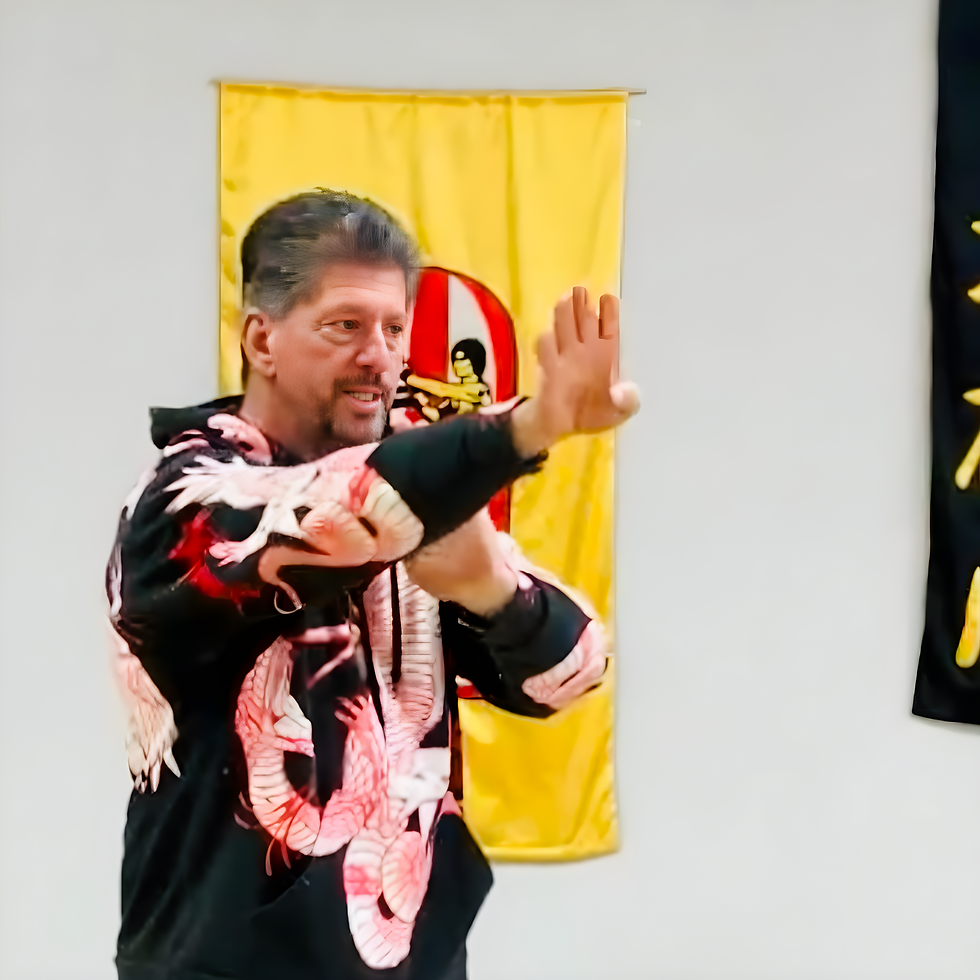
I’m over 60, and I’m still training Wing Chun.
I’m not training to prove that I can still move like I did when I was 25. I’m not trying to turn back the clock, and I’m not interested in pretending that age hasn't changed my body. It has. What age has changed, however, is the way I understand my martial art.
When I was younger, I wanted speed. I wanted power. I wanted endurance. I wanted to push myself and see what I was capable of. I wanted to know how hard I could train and how far I could take my physical abilities.
Today, I want something different.
I want to understand why a movement works. I want to feel the structure rather than force it. I want to recognize unnecessary tension. I want better timing, better balance, better footwork, and greater efficiency. I want to take everything I've learned over the years and continue refining it.
That is what Wing Chun means to me now. Turning 60 hasn't made me want to stop training. It has made me want to train with greater purpose.
And perhaps that is one of the most important lessons martial arts has taught me: the journey doesn't end when the body changes. The way you travel the journey changes.
I Am Still a Martial Artist
I don't look at being over 60 as a reason to step away from Wing Chun. I look at it as another stage of the journey. My body has changed, and I respect that. I don't recover exactly the way I did when I was younger. I have to pay more attention to mobility, recovery, balance, and how much stress I put on my body. But I also have something I didn't have when I was younger: experience.
Years of training have taught me how my body moves. I've learned what unnecessary tension feels like. I've learned how rushing can affect technique. I've learned that strength can sometimes hide poor structure. And I've learned that a movement doesn't have to be big to be effective.
Those lessons are now part of my Wing Chun.
I don't believe that training intelligently means training lightly all the time. There are still days when I work hard. There are still days when I challenge myself. But I have learned to distinguish between productive training and unnecessary punishment. I don't need to destroy myself during every workout. I want to finish a training session feeling that I accomplished something.
Maybe I improved a movement. Maybe I worked on my footwork. Maybe I refined a section of a form. Maybe I spent time on the dummy. Maybe I worked Chi Sao. Maybe I simply discovered something about my structure that I hadn't noticed before.
That's progress.
What Wing Chun Is Teaching Me Now
The Wooden Dummy
I have always valued the wooden dummy, but I appreciate it even more now. The dummy allows me to slow things down. I can work on angles, turning, footwork, elbows, and recovery. I can repeat a movement without needing to turn every session into a test of strength.
One of the combinations I like to work with is Biu Sao → turn → elbow → recover. I don’t have to rush it. I can feel the Biu Sao, establish the position, turn my body, bring the elbow into position, and then recover. Reset. Do it again.
For me, the important part isn’t how hard I hit the dummy. The important thing is whether the movement is becoming cleaner, more connected, and more efficient.
Biu Gee and the Importance of Recovery
As I continue to study Biu Gee, I find myself appreciating its principles more deeply. Biu Gee deals with situations where things may not go according to plan. You’re out of position. You’re too close. Your structure has been compromised. Your normal response isn’t available. You have to recover. Those ideas mean something different to me now.
I’ve learned that martial arts isn’t about always being in the perfect position. Neither is life. Things happen. You lose your balance. You make mistakes. You get older. Your body changes. The important thing is learning how to recover. That’s one of the reasons I continue to find Biu Gee so valuable.
Chi Sao: Listening Instead of Forcing
My approach to Chi Sao has changed as well. I’m less interested in winning the exchange. I’m more interested in understanding it. Can I remain relaxed? Can I feel the pressure? Can I recognize the change? Can I maintain my structure? Can I respond without rushing? Can I learn something from my training partner? These questions have become more important to me than simply trying to dominate the exercise.
Chi Sao is a conversation. You listen. You respond. Your partner responds. You adjust. And the better you become at listening, the less you need to force.
The Value of Good Footwork
The older I get, the more I appreciate good footwork. The hands can only do so much if the body isn’t in the right place. Good footwork allows me to maintain balance, control distance, and position myself correctly.
I don’t want to waste steps. I don’t want unnecessary movement. I want to step when I need to step. Turn when I need to turn. Stay connected to the ground. Sometimes the best martial arts technique isn’t the fastest punch. Sometimes it’s simply being in the right place at the right time.
Strength, Recovery and Longevity
Getting older doesn't mean giving up strength. I still believe that strength training has a place in martial arts. But I want strength that serves my Wing Chun. Strong legs. Strong back. Strong core. Good balance. Good mobility. A strong connection between the body and the ground.
I don't need to chase numbers just for the sake of numbers. I want useful strength. Strength that allows me to continue training. Strength that supports good structure. Strength that helps me remain capable in everyday life.
At this stage of my life, I also think about longevity. I don't want to train in a way that leaves me injured and unable to practice. I want to train today so that I can train tomorrow. And I want to be able to say the same thing five, ten, or even twenty years from now.
That means I have to respect recovery. I have to take care of my body. I have to train intelligently. And I have to understand that rest is sometimes part of training. The goal isn't simply to survive today's workout. The goal is to continue the journey.
I Have Less to Prove — More to Learn
Age has a way of changing your relationship with the ego. When I was younger, there were things I wanted to prove. Today, I don't feel the same need. The dummy doesn't care how old I am. My students don't need me to prove that I can still hit as hard as I did years ago. What I want them to see is something more valuable.
I want them to see that an experienced martial artist can continue to learn. I want them to see that technique can continue to improve. I want them to see that discipline doesn't disappear with age. And I want them to understand that martial arts is not something you simply finish. It is something you continue to explore.
Being a Sifu has taught me that teaching and learning are connected. Every student is different. Every student moves differently. Every student has different strengths and weaknesses. When I teach, I have to look at the art from another person's perspective. That forces me to examine my own technique. I have to ask: Why does this movement work? What is the purpose? Where should the body be? What is creating the movement? Where is the unnecessary tension? How can I explain this in a way the student can understand?
Teaching keeps me sharp. It keeps me curious. And it reminds me that no matter how many years I've trained, there is always more to learn.
My Wing Chun Is Still Evolving
One of the things I love about Wing Chun is that the art continues to reveal itself.
A movement I've practiced thousands of times can suddenly feel different. A technique that seemed simple years ago can reveal another layer. A form can teach me something new. The dummy can show me a different angle. A student can ask a question that makes me reconsider something. That's what keeps me interested. I am not finished. I don't think any serious martial artist should ever consider themselves finished. There is always another detail. Another refinement. Another question. Another level of understanding.
Still Training
If there is one thing I would tell another martial artist over 60, it would be this: Don't assume that getting older means you have to stop.
You may have to change how you train. You may have to change the intensity. You may have to give yourself more recovery. You may have to listen to your body in ways you didn't when you were younger. But you can still learn. You can still improve. You can still develop skill. You can still teach. And you can still enjoy the art.
I don't measure my martial arts journey by how young I can make myself feel. I measure it by whether I am still willing to step into the training room, put my hands on the dummy, work my forms, practice with my students, and learn something new.
That's what matters to me.
I'm over 60.
I'm still training.
I'm still learning.
I'm still teaching.
And I'm still on the journey.


