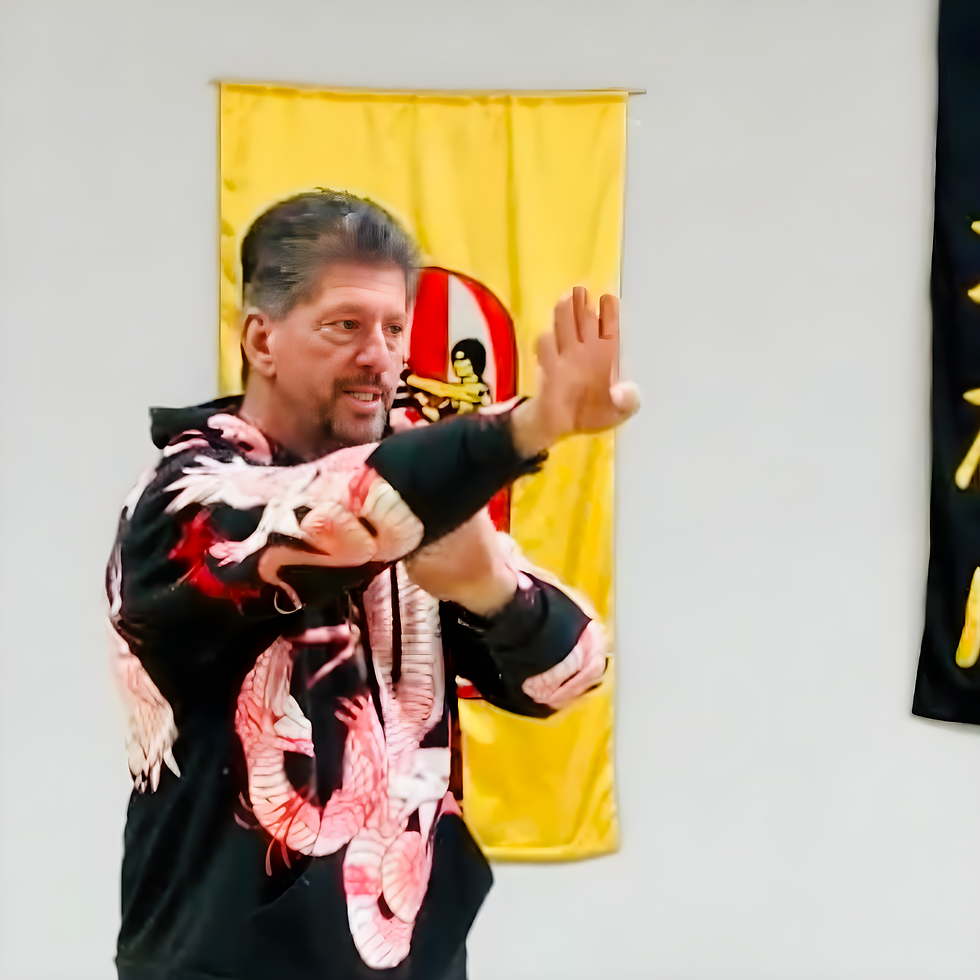
Dan Chi Sao: Where Wing Chun Structure Is Forged

Dan Chi Sao (Single Sticky Hands / 单黐手) serves as the indispensable bridge between stationary Wing Chun forms—such as Siu Lim Tao—and dynamic, live reflex training. While two-handed Poon Sau or free-flowing Double Chi Sao often capture the spotlight, Dan Chi Sao is where the foundational mechanics, sensitivity, and structure are rigorously isolated, forged, and refined.
1. Isolating and Calibrating Core Structure
By reducing partner interaction to a single arm, Dan Chi Sao strips away complexity and forces complete focus on structural integrity.
Elbow Energy (Lut Sau Jik Chung): It isolates the requirement to keep the elbow directed toward the partner’s centerline. Without two hands to compensate or muscle through a movement, any collapse or outward flare of the elbow immediately destroys structure.
Pure Rotational Flow: It trains the continuous, seamless transition between three fundamental hand positions:
Fook Sau (Bridge-Arm / Controlling Hand)
Tan Sau (Palm-Up / Receiving Hand)
Bong Sau (Wing Hand)
Forward Intent (Jing Jung): It forces the practitioner to focus on maintaining constant, forward-pointing pressure without over-committing or pushing.
2. Developing Energy Sensitivity (Gung Lik & Ting Lik)
Dan Chi Sao acts as the primary sensory laboratory for listening to and reading an opponent’s kinetic force.
Listening Force (Ting Jin: Through the point of contact, you learn to read the direction, magnitude, and changes in your partner’s force instantly—bypassing visual reaction time.
Reflexive Adaptation: You condition immediate, unthinking responses:
If the opponent pushes too hard → Yield and transform (e.g., Tan Sau shifts smoothly into Bong Sau).
If the opponent pulls or disconnects → Spring forward instantly (Lut Sau Jik Chung).
3. Grounding, Stance Alignment, and Weight Distribution
Dan Chi Sao reveals subtle errors in lower-body structure that are easily masked in solo form practice or two-handed sensitivity drills.
Aspect | Diagnostic Function in Dan Chi Sao |
Centerline Alignment | Forces accurate positioning of the Yee Jee Kim Yeung Ma (Goat-Clamping Stance) relative to the incoming line of force. |
Rooting & Sinking | Transmits force down through the spine and hips into the heels without leaning or tensing the shoulder joints. |
Body Unity | Ensures hand movements are backed by the core structure rather than isolated shoulder or arm strength. |
4. Building the Mechanical Bridge to Double Chi Sao
Attempting Double Chi Sao or free exchange without mastering Dan Chi Sao almost always leads to bad habits: relying on muscular strength, chasing the opponent’s hands, or losing centerline control.
Key Rule of Progression: Dan Chi Sao teaches you how one contact point behaves under dynamic pressure. Once both arms are operating independently yet in total coordination, Double Chi Sao becomes an extension of clear structural habits rather than chaotic struggle.
Comon Errors in Dan Chi Sao
In Dan Chi Sao, because the complexity of two independent arms is removed, subtle structural faults instantly expose themselves. Even advanced practitioners occasionally let these mechanical leaks creep in under pressure.
1. Pushing Instead of Sticking (Losing the Bridge)
The Error: Treating Dan Chi Sao like a pushing match or a strength test. The practitioner attempts to overpower the partner's incoming force by shoving outward from the shoulder or chest, losing the tactile bond.
The Correction: Re-establish Jing Jung (forward intent) combined with Ting Lik (listening energy). The point of contact should feel like a spring under light compression—maintaining continuous, effortless contact without leaning your body weight into the partner.
2. Flaring or Collapsing the Elbow
The Error: Allowing the elbow to drift outward away from the centerline during the Bong Sau or Tan Sao transition, or letting it drop dead and collapse inward toward the ribs. Both destroy structural integrity and make the arm easily susceptible to being jammed or bypassed.
The Correction: Anchor the elbow downward using the latissimus dorsi and core structure, keeping it aligned with the central axis (Lut Sau Jik Chung). Think of the elbow as the heavy pivot point of a door; it stays rooted in its sector while the forearm rotates freely.
3. Visual Chasing (Reacting with the Eyes)
The Error: Watching the partner’s hand or wrist with the eyes to decide when to change from Fook Sau to Tan Sau or Bong Sau. This creates a micro-delay based on visual processing time rather than tactile reflex.
The Correction: Train with closed eyes or a blindfold during solo and partner drills. Force the nervous system to rely entirely on tactile feedback through the forearm bridge, responding instantly to the angle and pressure vector of the incoming force.
4. Robotic or Jerky Transitions Between Shapes
The Error: Executing Fook Sau, Tan Sau, and Bong Sau as three separate, rigid static postures rather than a continuous, fluid circle. Practitioners often lock their elbow joints or pause between changes.
The Correction: Visualize the transition as a rolling wheel or a figure-eight vortex. The shift from Bong Sau into Tan Sau must be seamless, utilizing the natural elasticity of the wrist and elbow structure to transform force rather than blocking it.